
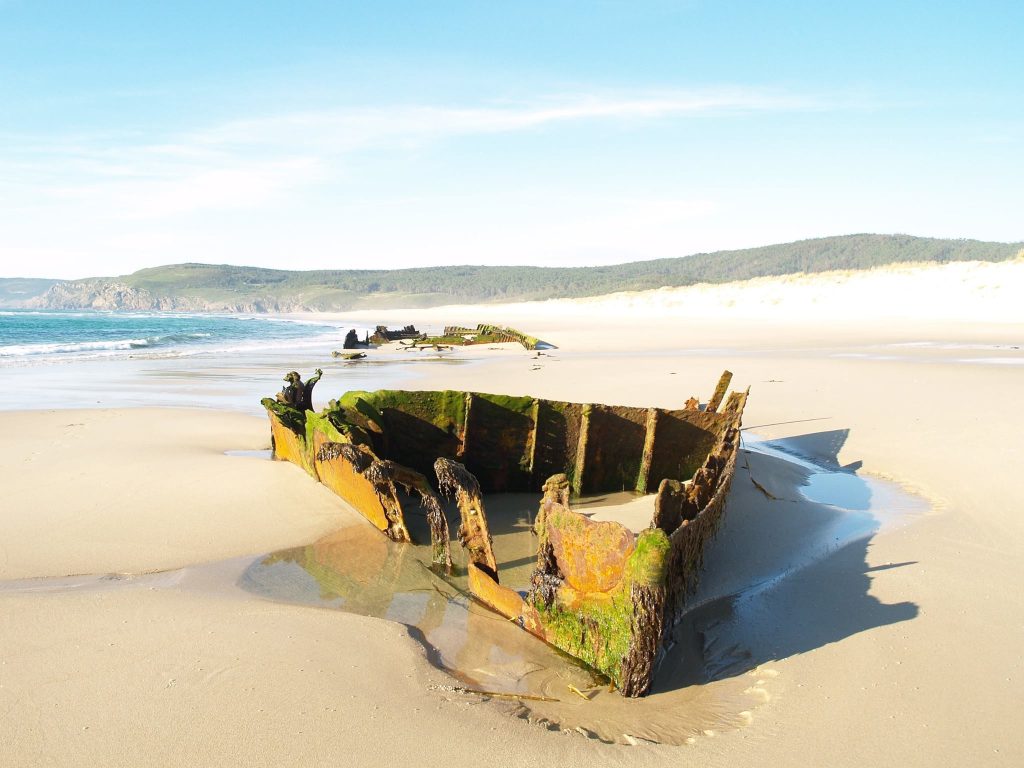
WHAT PEOPLE ARE SAYING AROUND HERE: There is a story of the Costa da Morte that is neither viewed from its cliffs nor walked along its trails. It is a story written tens of meters underwater, where the Atlantic guards one of the most fascinating and densely packed underwater archaeological sites on the entire European continent.
From Spanish Armada galleys and steamships to World War I battleships and 20th-century merchant vessels, the waters bordering municipalities such as Cee, Dumbría, Fisterra, Muxía, and Camariñas hold hundreds of stories of tragedy, heroism, and memory on the seabed. Today, this valuable submerged heritage is coming to light thanks to pioneering initiatives in protection, research, and tourism outreach that are preparing the region to become a UNESCO Global Geopark.
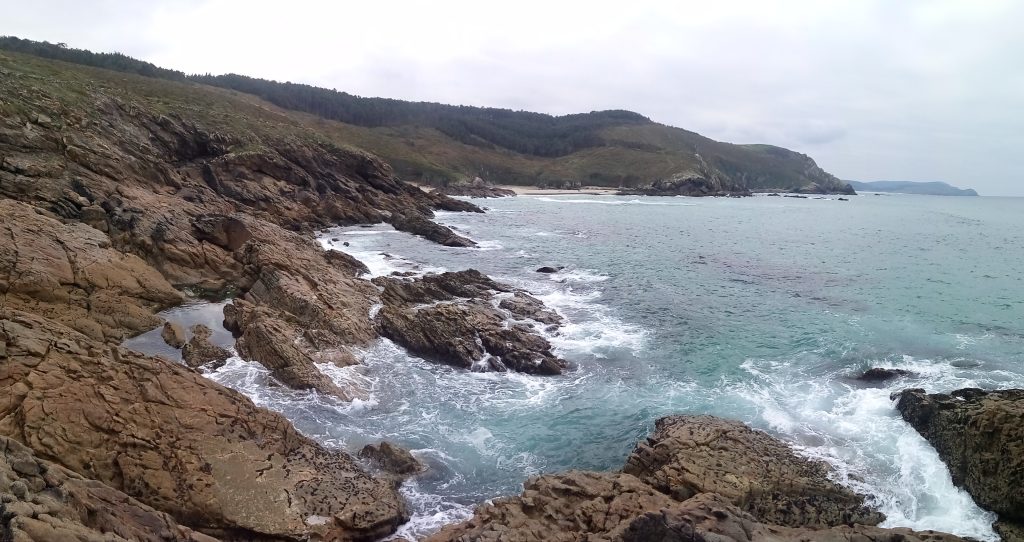
A catalog of legends: What does the seabed of the Costa da Morte hide?
Historians’ estimates indicate that, off the Galician coast alone, there are more than 90 positively identified shipwrecks and hundreds of documented references to wrecks occurring from the Middle Ages to the present day.
Among the gems of this veritable “sunken museum,” the following stand out:
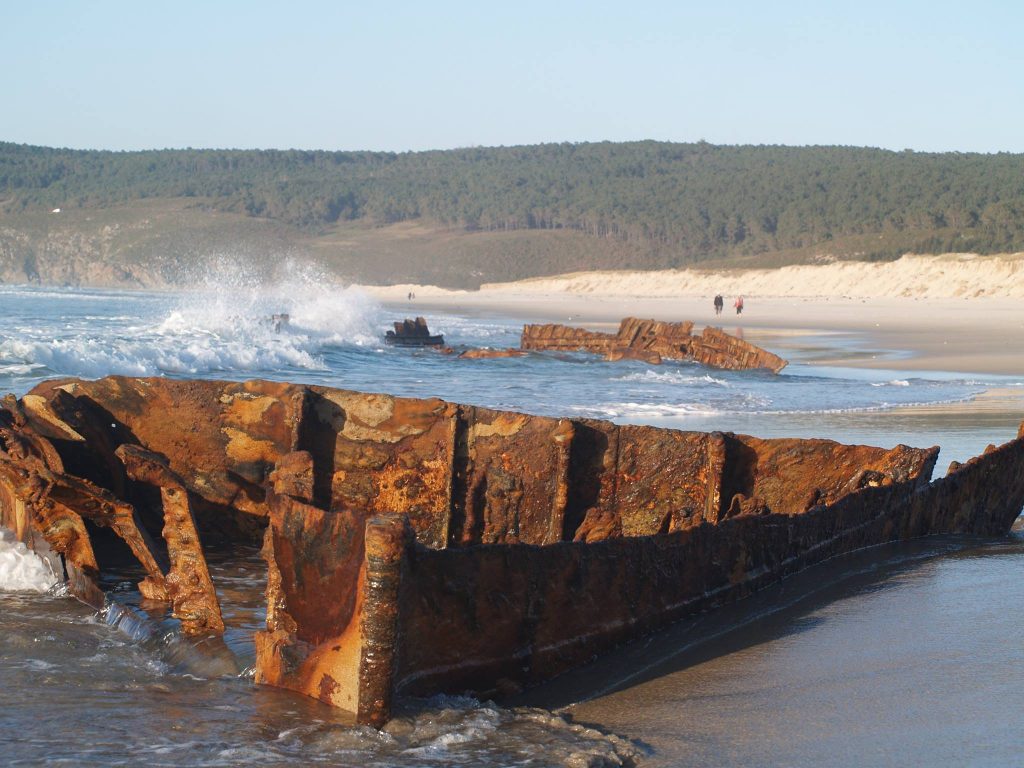
- The Silva Gouveia (1927) at O Rostro Beach: Just 2 kilometers from caSAnosa, O Rostro Beach holds the remains of this 64.5-meter-long Portuguese steamship. It ran aground on the sands—laden with sugar—after departing Hamburg during a severe storm. During spring tides and following major winter storms that shift the sand, low tide reveals the ship’s ribs and metal structure, offering a fascinating historical spectacle right on our doorstep.
- Padilla’s Armada (1596): Near the mouth of the Corcubión estuary and Fisterra, a catastrophic storm sank more than twenty ships from Philip II’s great fleet—commanded by Martín de Padilla—leaving an indelible mark on the seabed.
- The legendary HMS Serpent (1890): The tragic shipwreck of this Royal Navy cruiser at Punta do Boi (Camariñas) not only gave rise to the moving “English Cemetery” (Cementerio de los Ingleses) but also marked the historical turning point after which this coastline became internationally known as the Costa da Morte (Coast of Death).
- The steamship Great Liverpool (1846) and the Captain (1870): Pioneers of steam navigation and major British warships whose remains rest beneath the cold Atlantic currents.
- World War II relics: Sites containing everything from German submarines (U-boats) to neutral merchant freighters attacked on the high seas.
Rescued Treasures: Heritage Recovered on Land
Many of the artifacts recovered during underwater archaeological expeditions and historical salvage operations have been cataloged, restored, and inventoried for preservation. Among the most notable “acquisitions” and finds brought from the seabed to the surface are:

- Bronze and cast-iron cannons: Much of the naval artillery belonging to Padilla’s fleet (16th century) and 18th-century galleons was recovered from the seabed of the Corcubión and Fisterra estuary. Today, these pieces are preserved and displayed in museums such as the Museo do Mar de Galicia (Vigo) and the Castle of San Antón (A Coruña), as well as in local public collections.
- Anchors and anchoring gear: Ranging from ancient stone stocks to imposing rusted-iron Admiralty anchors, these were recovered from inlets such as Fisterra and Camariñas. Many now serve as maritime monuments in the region’s ports and along its waterfront promenades.
- Structural wooden components and ship’s ribs: Remains of masts and fine timbers—such as oak or teak treated against decay—recovered during underwater archaeological surveys and preserved in desalination tanks prior to exhibition.
- Personal effects and shipboard tableware: Pewter plates, silver coins (pieces of eight), sealed gin bottles, and fragments of traditional pottery recovered from English and Spanish shipwreck sites.
- Machinery and metal components: Steam boilers, bronze propellers, steering systems (rudders), and the distinctive metal plates that have enabled the definitive identification of 19th- and 20th-century shipwrecks.
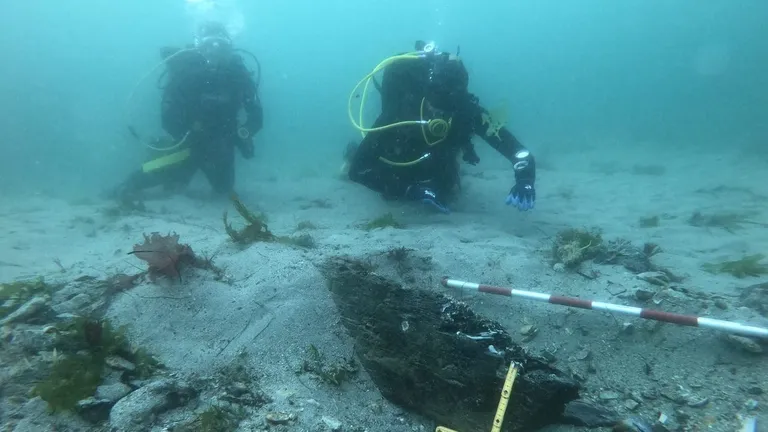
Protecting, studying, and disseminating: Initiatives that are changing the paradigm
For decades, this marine treasure remained forgotten or vulnerable to looting. However, in recent years, entities such as the Costa da Morte Professional Tourism Association (APTCM), local municipalities, and the Xunta de Galicia have joined forces to change its fate:
1. The decisive push for the Costa da Morte Geopark
The Costa da Morte Geopark project seeks international recognition from UNESCO, not only for the area’s unique geological formations and cliffs but also for the intimate relationship between the marine environment and human history. Shipwrecks are considered assets of immense heritage and natural value, as over the centuries they have transformed into artificial reefs teeming with biodiversity.
2. Digitization and the Rimartes project
Initiatives like the Rimartes project (Riquezas do mar, tesouros do profundo—Treasures of the Sea, Treasures of the Deep) have enabled the interactive mapping and digitization of these discoveries. Thanks to these technologies, both recreational diving enthusiasts and visitors on land can discover the exact location and history of each vessel through scale models, 3D viewers, and interpretive trails.
3. Underwater archaeology and science serving the community
Recent archaeological projects at iconic beaches and coves—such as studies in the Corme area or the inner estuaries—are bringing to light cannons, anchors, and wooden remnants that hold answers regarding our nautical past.
Discover the mysteries of the Costa da Morte, with caSAnosa as your base.
Whether you wish to immerse yourself in the crystal-clear Atlantic waters, visit the lighthouses that keep watch over these dramatic shores, or walk the trails of the Camino de Santiago, the Costa da Morte invites you to travel at a leisurely pace and let yourself be captivated by its history.
At caSAnosa, in the peaceful parish of Lires (Cee), we offer the perfect place to rest between stages and connect with the magic of this region.
Walking the Camino or exploring Costa da Morte?
Whether you are continuing your pilgrimage to Fisterra and Muxía or looking for a peaceful coastal getaway, caSAnosa provides the perfect sanctuary to relax and recharge in nature.
Sources and reference publications
If you are interested in delving deeper into research on Galician underwater heritage and current outreach projects:
- Minaría Sostible: Costa da Morte: cada día más cerca de convertirse en Geoparque
- Proyecto Rimartes: Riquezas do mar, tesouros do profundo (Ruta por los pecios de la costa coruñesa)
- La Voz de Galicia: Los pecios de la Costa da Morte salen a flote a través de internet
- Adiante Galicia: El patrimonio subacuático de la Costa da Morte objeto de estudio